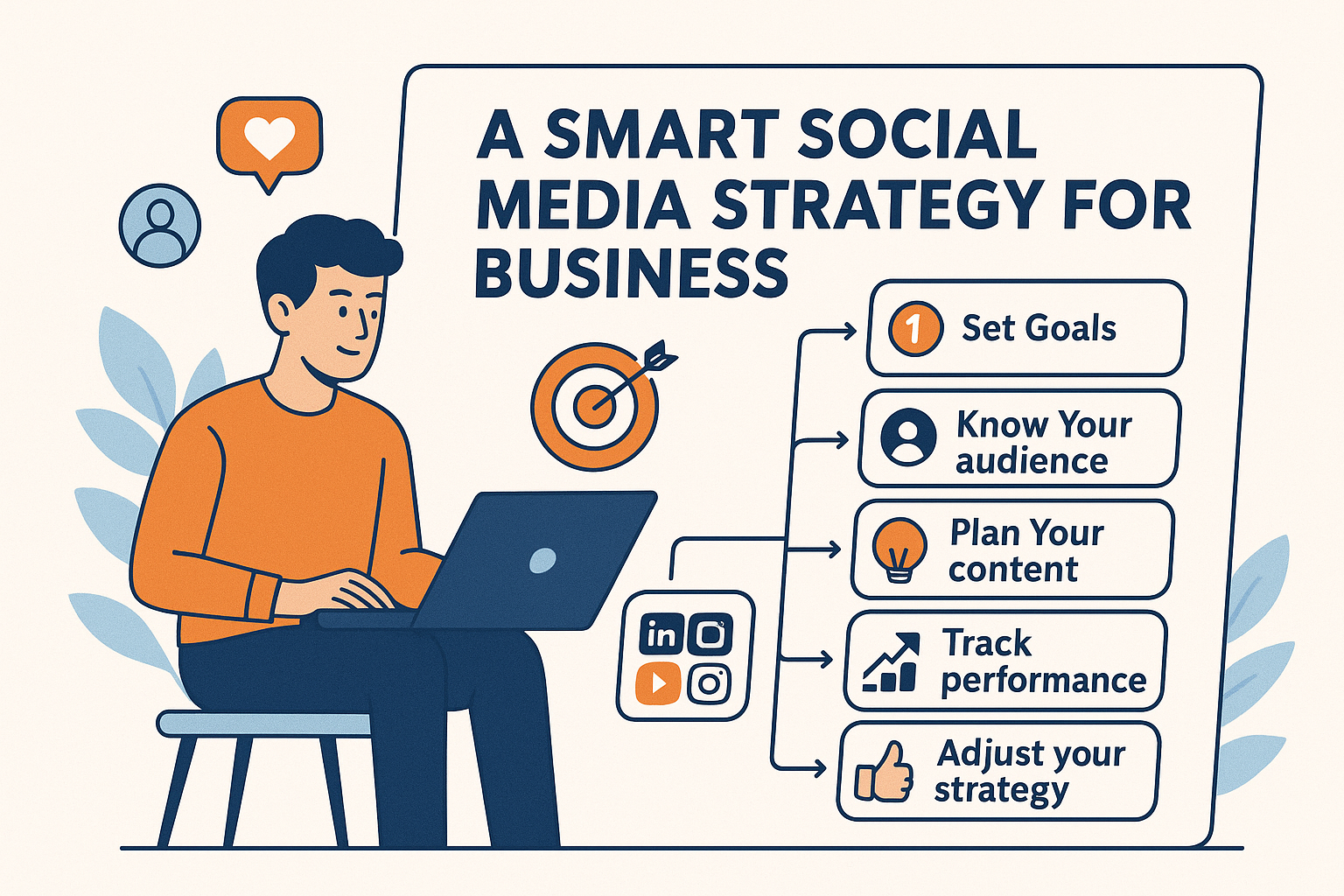
Smart Social Media Strategy for Business Growth— In today’s digital-first world, social media has become essential for every brand. A Smart Social Media Strategy for Business helps you build visibility, connect with customers, and generate consistent sales. Whether you run a boutique, a real estate agency, a coaching brand, or a large enterprise, having a well-planned Gstrategy gives your business clarity, direction, and long-term growth.
Simply posting without planning does not deliver results. You need to understand your audience, choose the right platforms, create valuable content, and track performance. In this guide, you’ll learn sterp-by-step how to build a Smart Social Media Strategy for Business that boosts engagement, drives leads, and strengthens brand loyalty.o
1.Understand the Imptortance of a Smart Social Media Strategy for Business
Many businesses start posting without knhowing their goals. A Smart Social Media Strategy for Business helps you:
• Stay consistent with posting
• Understand audience needs
• Use time and resources efficiently
• Improve brand awareness and trust
• Increase engagement and leads
• Measure what works and what doesn’t
2.Define Your Business Goals Clearly
Before creating content, it is important to decide what your business wants to achieve through social media. A Smart Social Media Strategy for Business Growth should always align with your overall business objectives. When your goals are clear, your efforts become more structured, intentional, and results-driven.
Common goals include:
• Increasing brand awareness among your target audience
• Improving engagement through meaningful interactions
• Generating quality leads for your products or services
• Driving traffic to your website or landing pages
• Building a strong and loyal community
• Boosting overall sales through organic and paid campaigns
3.Understand Your Target Audience
Knowing your audience is the foundation of a strong social media plan. Your content should directly address the people you want to attract. A Smart Social Media Strategy for Business works best when you clearly understand who your customers are and what they expect.
Focus on:
• Age, gender, and location – Helps you choose the right platforms.
• Interests and behaviours – Understand what they like and how they interact online.
• Pain points – Create content that solves their problems.
• Preferred platforms – Identify where they spend most of their time.
• Favourite content formats – Know whether they prefer reels, stories, carousels, or long videos.
Creating a simple customer persona makes your content more relevant, engaging, and effective.
4.Choose the Right Social Media Platforms
Not every platform suits every brand. A Smart Social Media Strategy for Business focuses only on the platforms where your audience spends time.
Platform recommendations:
• Instagram – fashion, lifestyle, food, fitness
• Facebook – local businesses, education, real estate
• LinkedIn – B2B, professionals, coaches
• YouTube – tutorials, reviews, long-form content
• TikTok/Reels – short-form viral videos
• Pinterest – decor, DIY, fashion, design
Choose platforms wisely, not based on trends.
5.Analyse Your Competitors
Competitor analysis is a crucial step in building a strong social media presence. Understanding what your competitors are doing helps you identify industry trends, content patterns, and opportunities to stand out. When developing a Smart Social Media Strategy for Business, competitor research allows you to learn from others’ strengths while avoiding their weaknesses.
While analysing competitors, focus on:
• Posting frequency – How often they post on each platform and what posting schedule works best for your audience.
• Content formats – Identify whether they use reels, carousels, stories, long videos, or static posts, and observe which formats generate the most attention.
• Engagement rates – Check how many likes, comments, shares, and saves their posts receive. High engagement shows what users find valuable.
• Hashtags used – Analyse their hashtag strategy to understand which tags help them increase reach and visibility.
• Popular reels or posts – Study their top-performing content to see what resonates most with the audience.
• Customer reviews and comments – Look for customer pain points, frequently asked questions, and common expectations. These insights help you create content that addresses real audience needs.

6.Create High-Quality, Valuable Content
Content is the foundation of your social media success. No matter how active you are on different platforms, you will only attract and retain followers when your content provides real value. Each post should educate, inspire, entertain, or solve a problem for your audience.
Include a mix of these content types:
• Educational – Tips, tutorials, industry insights, how-to guides
• Entertaining – Fun reels, trends, relatable moments
• Informative – Updates, facts, news, product details
• Inspirational – Quotes, success stories, motivational messages
• Promotional – Offers, new launches, service highlights
• Behind-the-scenes – Your team, workspace, process, culture
High-quality visuals, clear messaging, and consistent branding make your content more engaging and memorable.
Follow the 80/20 rule for balance:
• 80% value-focused content to educate and engage
• 20% promotional content to highlight products and services
This approach builds trust, encourages interaction, and strengthens your overall social media presence.
7.Maintain a Consistent Posting Schedule
Consistency is one of the strongest factors in growing on social media. Posting regularly helps you stay visible, increases reach, and keeps your audience engaged with your content. Every platform has its own ideal posting frequency, so plan how often you want to publish on:
• Instagram
• Facebook
• LinkedIn
• YouTube
• Reels or short videos
Creating a weekly or monthly content calendar helps you stay organized and avoid last-minute stress. You can also use scheduling tools like Buffer, Hootsuite, Meta Business Suite, Later, and Zoho Social to automate posts and maintain consistency even on busy days. Regular posting builds trust and keeps your audience connected to your brand.
8.Use Hashtags Wisely
Hashtags help improve your post visibility and attract new audiences. Use a balanced mix to reach the right people:
• Low, medium, and high competition hashtags
• Industry-specific and location-based hashtags
• Relevant, clean, and non-spammy hashtags
Consistent use of the right hashtags increases reach and overall engagement.
9.Engage with Your Audience
Social media grows through real conversations. To strengthen your Smart Social Media Strategy for Business:
• Reply to comments
• Respond to messages
• Interact with followers
• Use polls, Q&A, quizzes
• Mention loyal customers
Higher engagement improves reach and visibility.
10.Use Paid Advertising for Faster Growth
While organic content helps build trust and engagement, paid advertising allows you to reach a larger audience in a shorter time. Running targeted ads ensures your message is seen by people who are most likely to be interested in your products or services.
Paid campaigns can be used for:
• Generating qualified leads
• Increasing brand awareness
• Driving website or landing page visits
• Boosting product or service sales
• Retargeting people who previously interacted with your content or website
Start with a small budget and experiment with different audience groups, ad creatives, and formats. Analyse the results and gradually increase your budget once you identify what works best. A well-planned ad strategy can significantly speed up your growth and improve overall campaign performance.
11.Track and Measure Your Results
Monitoring your performance is essential to understand what’s working and what needs improvement. A Smart Social Media Strategy for Business relies on consistent tracking so you can make informed decisions and refine your approach over time. By analysing your data, you can identify your best-performing content, audience behaviour, and overall growth patterns.
Track key metrics such as:
• Engagement – Likes, comments, shares, and saves
• Reach – How many people are seeing your content
• Follower growth – Whether your audience is increasing steadily
• Website clicks – Traffic driven from social platforms
• Leads – Number of inquiries or sign-ups generated
• Sales – Conversions from social media efforts
Use tools like Google Analytics, Instagram Insights, LinkedIn Analytics, Meta Insights, and YouTube Studio to gather accurate data. Regular tracking helps you optimize your Smart Social Media Strategy for Business and achieve stronger, more consistent results.
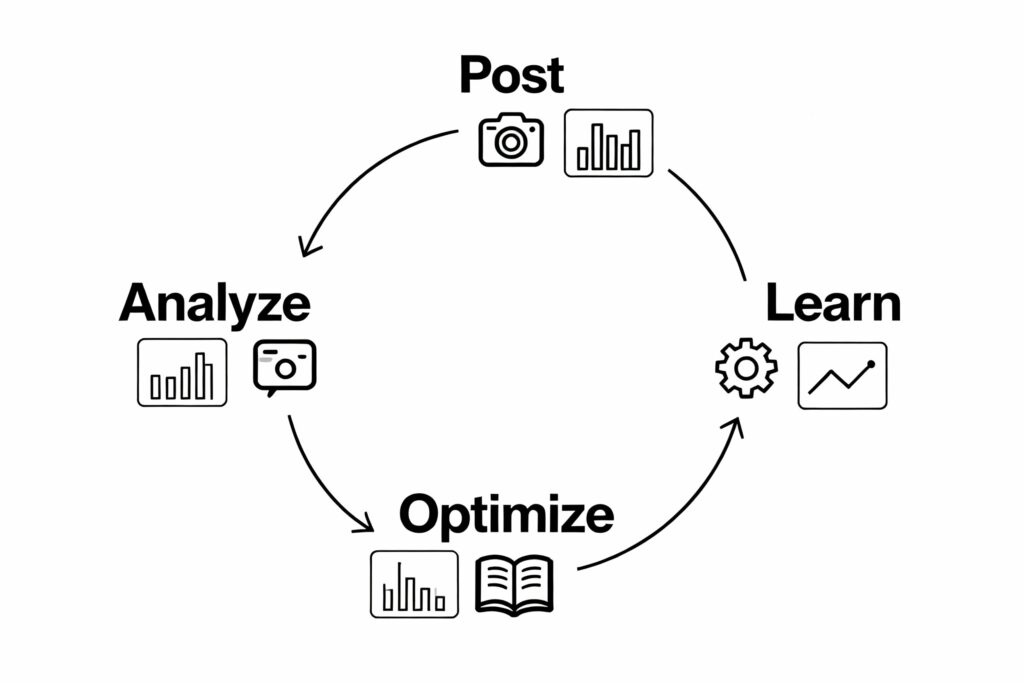
12. Adjust and Improve Regularly
Trends on social media change quickly, so it’s important to review your overall strategy every month. Regular analysis helps you understand what’s working and what needs improvement. Take time to identify:
• Top-performing posts – Content that gained the most engagement
• Audience preferences – Topics and formats your followers enjoy
• Best platforms – Channels giving you the highest results
• Areas to improve – Gaps in content, consistency, or targeting
By reviewing these insights, you can adjust your content style, posting frequency, and overall approach to achieve better and more consistent results. Regular refinement ensures your social media presence stays relevant and effective.
Conclusion
A Smart Social Media Strategy for Business goes beyond posting—it requires understanding your audience, choosing the right platforms, sharing valuable content, and analysing performance. With a clear and consistent approach, your business can build trust, attract customers, increase sales, and grow sustainably. Start small, stay consistent, and keep improving. Over time, you will build a strong brand with loyal engagement and long-term success.
FAQ’s
1. How can I make my content more engaging?
Use eye-catching visuals, interactive polls, relatable topics, and clear calls to action to encourage interaction.
2. What tools can I use to plan my social media content?
Tools like Canva, Notion, Google Sheets, Buffer, and Later help you plan, design, and schedule posts easily.
3. Is it necessary to post every day?
No. Consistency is more important than daily posting. Stick to a schedule you can maintain long-term.
4. Should I follow trends on social media?
Yes, but only if the trend aligns with your brand and audience. Don’t follow trends just for reach.
5. How do I know what content my audience likes?
Check insights to see which posts get the most engagement, saves, shares, and comments. This tells you what works best.